
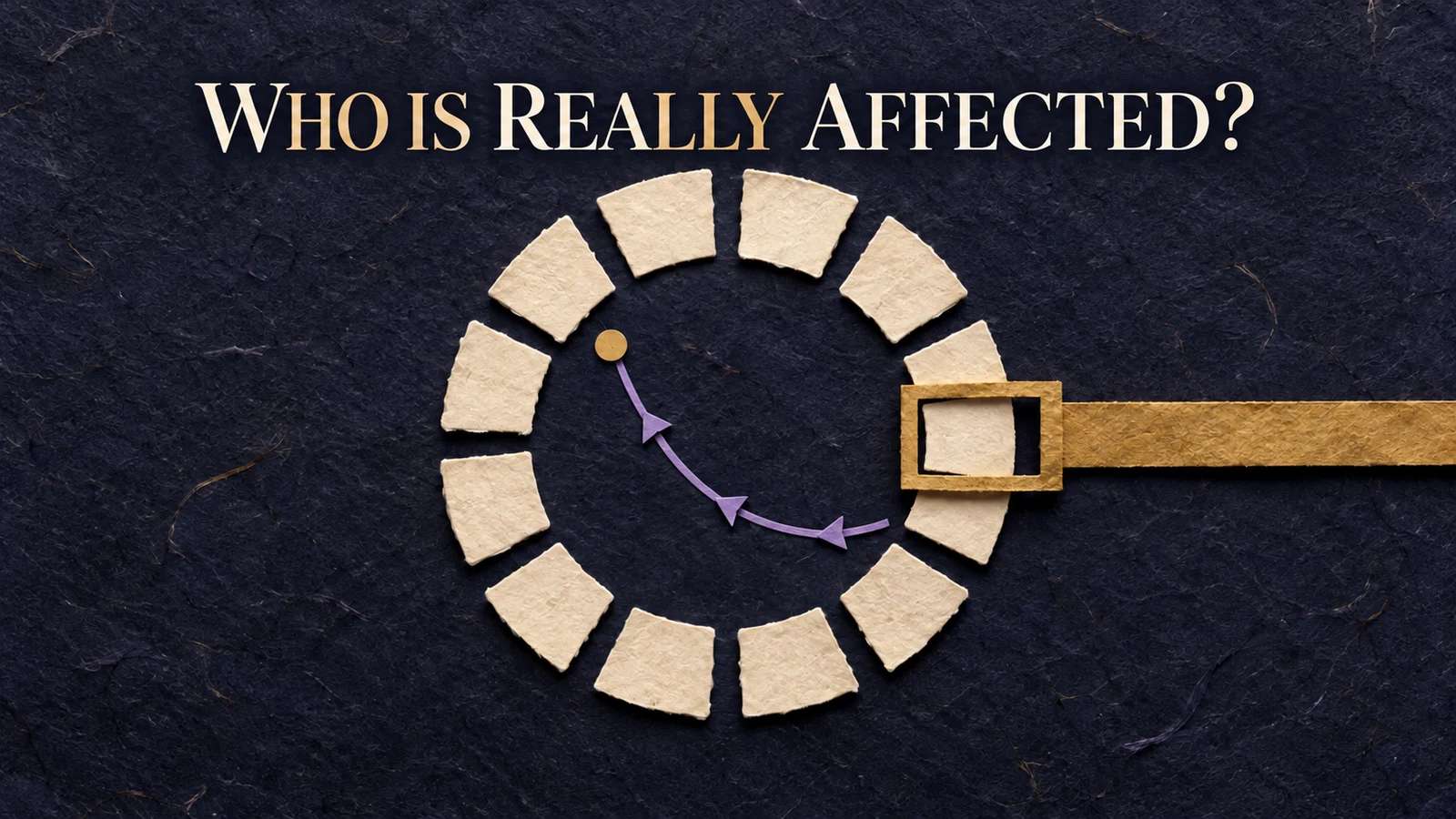
Gemini, Virgo, and Scorpio, says one current list. Gemini and Virgo, says another. Some articles add Taurus, Leo, or Aquarius. Anyone asking whether their zodiac sign is “especially affected” by Mercury retrograde 2026 can receive contradictory answers before the first supposed misunderstanding even occurs.
The contradiction is not evidence that somebody overlooked one secret correct list. The articles use different astrological rationales: Mercury’s sign rulership in one case, the sign of the retrograde in another, and possible contacts to a natal chart in a third. Those levels are not interchangeable. None of them establishes that a person must experience mishaps or postpone decisions.
The short answer is this: Popular Sun-sign astrology often names Gemini, Virgo, and Scorpio. An individual astrological interpretation cannot be derived from the Sun sign alone. Degrees, the Ascendant, houses, and specific natal contacts would matter more than a general top-three list.
When is Mercury retrograde in October 2026?
Mercury stations retrograde on October 24, 2026, at 9:12 a.m. CEST at 20°58′ Scorpio. It stations direct on November 13 at 4:53 p.m. CET at 5°02′ Scorpio. CHANI’s Mercury retrograde calendar also lists the pre-shadow beginning October 4 and the post-shadow ending November 29. The zodiacal section crossed during the retrograde therefore runs from roughly 21 to 5 degrees Scorpio.
“Retrograde” first describes an observable apparent motion. Mercury does not reverse its physical orbit. NASA’s explanation of retrograde motion attributes the effect to the relative positions and movements of Earth and the planet. From Earth, Mercury temporarily shifts westward against the background; in a heliocentric view, it continues along its orbit.
The claim that this loop symbolizes review, delay, or confused communication belongs to astrology. Our 2026 Venus and Mercury retrograde timeline covers the full autumn cycle. This article has a narrower job: explaining why headlines select particular zodiac signs.
Level 1: Why headlines name Scorpio
Mercury spends the entire retrograde proper in tropical Scorpio. Scorpio is therefore the most obvious answer when an article works only with Sun signs: The transit takes place in the same sign where a Scorpio Sun can be located.
Even that statement is broad. A zodiac sign spans 30 degrees. A person with the Sun at 7 degrees Scorpio falls within the degree range Mercury crosses three times. A Sun at 28 degrees Scorpio falls outside that loop. Both people read the same Sun-sign horoscope even though the degree relationship differs.
Popular forecasts also add symbolic themes associated with the transit sign. In Western astrology, Scorpio is linked with confidentiality, shared money, dependency, motives, and what lies beneath the surface. That symbolism can produce a useful reflection question: Which information has been checked, and which meaning am I assigning to it? It does not follow that Scorpios must uncover secrets or misjudge contracts.
A current German Harper’s Bazaar article names Gemini, Virgo, and Scorpio. Its selection demonstrates how two rules can be combined in one list: Scorpio because of the transit sign, and Gemini and Virgo because of Mercury’s traditional rulership. That is an editorial choice within astrological symbolism, not a measured risk comparison among twelve populations.
Level 2: Why Gemini and Virgo appear
In traditional Western astrology, Mercury rules both Gemini and Virgo. Many Sun-sign lists therefore claim these two signs feel every Mercury retrograde more strongly. The Old Farmer’s Almanac calls Gemini and Virgo the most heavily affected while also publishing separate predictions for all twelve signs.
Rulership explains why astrological writing connects these signs with Mercury. It does not prove a higher mishap rate among people with Gemini or Virgo Suns. A significant distinction also tends to disappear: Your Sun sign is not automatically the placement whose ruler is treated as the ruler of the whole chart.
In many modern astrology schools, the chart ruler is the planet that rules the sign of the Ascendant. Mercury is therefore the chart ruler for Gemini or Virgo rising. Finding the Ascendant requires an accurate birth time and place; the birth date alone is not enough. Our guide to finding your chart ruler walks through the calculation. Astrotheme also connects the chart ruler to the Ascendant.
That creates two very different statements:
- “You are a Gemini, so Mercury retrograde affects you most” is a broad Sun-sign headline.
- “Mercury is the chart ruler for Gemini or Virgo rising” describes a rule within a specific astrological method.
The second statement is still symbolic interpretation, not a scientifically verified effect. It is simply more precise about which chart component it means.
Level 3: What specific natal contacts are supposed to show
An individual transit reading does not begin with a ranking of signs. It looks for degree contacts. In this cycle, Mercury moves between 20°58′ and 5°02′ Scorpio. Astrologers would therefore pay closer attention to planets or angles within that range that form a close major aspect to Mercury.
A conjunction can occur with points in Scorpio. Opposing positions in Taurus can form an opposition; positions in Leo or Aquarius can form squares. Whether a contact counts as close depends on the orb a practitioner uses. The house Mercury crosses adds another interpretive layer. Without a reliable birth time, the Ascendant, houses, and their cusps are uncertain.
This does not make transit interpretation objectively true. It does explain why a more methodical astrological answer looks different from “these three signs are unlucky”:
1. Which natal point is contacted? The Sun, Mercury, Ascendant, and Midheaven represent different themes in astrology. 2. How exact is the degree contact? Two placements sharing a sign do not automatically form a close conjunction. 3. Which life area is assigned through the house? That statement requires a trustworthy birth time. 4. Is a specific theme actually repeating? A documented conversation or real contract question is more informative than assigning every typo to the transit afterward.
Astrological geometry can therefore explain why Taurus, Leo, and Aquarius placements may also appear in interpretations. It does not mean every person with those Sun signs is “more affected.” The relevant claim would concern a specific natal point in a specific degree range.
A three-level check instead of a zodiac ranking
If you want to observe this transit astrologically, keep the three levels separate. That prevents a headline from turning into evidence.
1. Sun-sign level: What general story does the article tell about your sign? Label it as broad interpretation. Do not ask only whether it feels familiar; ask whether it is written so generally that almost anyone could recognize themselves in it.
2. Chart-ruler level: Do you know your Ascendant from a reliable birth time? Only Gemini or Virgo rising would make Mercury the chart ruler under the common modern rule. A Gemini Sun does not answer that question.
3. Transit level: Do planets or angles in your natal chart fall between approximately 5 and 21 degrees of Scorpio, Taurus, Leo, or Aquarius? If so, note the actual degree and potential aspect. If not, you do not need to search for another rationale proving that you must still be affected.
Then make the most important separation: observation versus interpretation. “The contract feedback arrived two days later” is an observation. “Mercury caused the delay” is an astrological attribution. “Every important decision is dangerous until November 13” is an additional rule that does not follow from the sky data.
Must you postpone decisions until November 13?
No. An astrology calendar is not a blanket ban on decisions. If essential information is missing, a contract is unclear, or somebody is applying time pressure, postponing can be sensible regardless of Mercury. If the facts, deadlines, and consequences are clear, the retrograde supplies no established reason to delay a necessary choice.
Practical care still makes sense: check names, figures, and dates; ask about unclear clauses; confirm important agreements in writing; seek professional advice for major financial or legal decisions. Those steps help on every date and for every zodiac sign.
The question “Which zodiac signs are most affected by Mercury retrograde 2026?” therefore has three answers. Scorpio is named because of the transit sign. Gemini and Virgo appear because of Mercury’s rulership. Specific natal placements would be the more differentiated layer within individual astrology. None of those answers turns mishaps into certainty. The most honest use of the transit is not sorting people into a risk list, but making the method behind the list visible.


From the Zodiacally community