
Diesen Artikel auf Deutsch lesen
The next New Moon falls on Thursday, September 10, 2026, at 11:27 p.m. EDT in New York. In Germany, it will already be Friday, September 11, at 5:27 a.m. CEST. If you have seen both dates on different calendars, that probably explains it. And if you are wondering whether to stay up late or set an early alarm for a New Moon ritual, the personal writing exercise in this article doesn't require either.
Perhaps you like having a date in the calendar because otherwise you rarely stop to ask yourself what has been on your mind. The New Moon can be a reason to make that time. It gets less appealing when the preparation becomes another task: finding the correct hour, wording your intentions properly, and trying not to miss a window. It helps to separate two questions. When does the astronomical phase occur? And when do you have time for whatever you would like to do with it?
Why calendars give two different dates
The U.S. Naval Observatory lists the New Moon at 03:27 Universal Time on September 11. Converted to local time, that means:
- New York: September 10, 11:27 p.m. EDT.
- Germany, Austria, and Switzerland: September 11, 5:27 a.m. CEST.
These are the same moment. An American article headed “September 10 New Moon” can be correct even though a European calendar gives the following day. Whenever you find an exact time, check the time zone alongside it. EDT is Eastern Daylight Time; that clock time cannot simply be copied into a calendar set to Germany.
A Reddit question asking for a reliable lunar calendar shows why this can be confusing. The reader wants a list combining New Moons, Full Moons, exact New York times, and zodiac signs. It is a reasonable request. A date on its own doesn't tell you where an event belongs in the calendar for your location.
You can keep your own notes straightforward: “New Moon, September 10, 11:27 p.m. EDT,” if you are in New York. Make a separate appointment for your writing time, perhaps Friday evening. That way, you can see which entry records the astronomical event and which one is your personal plan. If you are traveling, check the conversion for your current time zone rather than relying on the clock time you saved at home.
The New Moon isn't the first visible crescent
You might want to begin a ritual when you see the Moon. At New Moon, that isn't a reliable guide. As NASA explains in its guide to Moon phases, the sunlit side faces away from Earth at New Moon, and the Moon is usually invisible. The thin waxing crescent belongs to a later phase.
The time of the New Moon therefore doesn't mark the first visible sliver of light, and it isn't automatically the time of moonrise where you live. You don't need to find something in the sky that night to confirm that the phase has happened. Cloud cover doesn't change its timing either.
Looking outside can still be part of your personal practice. Perhaps you enjoy a walk before sitting down, or you like writing beside an open window. Those choices help create a setting in which you want to spend some time. If you would rather use the visible crescent as your cue, you can choose that too. It is a different reference point from the exact New Moon. Knowing the distinction saves you from waiting for a sight that usually won't be there at the moment listed in your calendar.
What the Virgo symbolism offers
In tropical astrology, this conjunction of the Sun and Moon falls in Virgo. Cafe Astrology associates this September New Moon with care, practical tasks, and attention to detail. That is an astrological interpretation, rather than an astronomically established effect on your daily life.
As a writing prompt, it suggests a manageable question: Which detail would I like to understand before making a bigger plan? Perhaps “more time with friends” has been on your wish list for weeks. What are you missing specifically: a regular meeting, a longer phone call, or the feeling that someone else wants to invite you? Finding the words for that can make it easier to bring up.
Here is a hypothetical example. Every month, you resolve to spend less time on your phone in the evening. While writing, you realize that you are mostly waiting for a message from one particular person. That gives you a different question to consider: would you like to talk with them about how you keep in touch? You don't have to settle it that night. A more accurate description gives you something useful to return to later.
You don't need a Virgo Sun or a particular birth-chart placement to try the question. It is an optional reflection prompt. Your answer comes from the circumstances of your life; the zodiac sign alone cannot supply it. You may find that the detail you want to explore has little to do with organization or routines, and that is fine for this exercise.
Does a personal ritual need a precise window?
If you follow a particular spiritual or religious tradition, its rituals may have their own timing rules. A general blog article cannot define that framework for you. Here, we are talking about a writing practice you choose for yourself: setting aside time, recording some thoughts, and returning to them later. This exercise has no required starting minute.
You may enjoy deliberately connecting it to the New Moon's timing. Perhaps you will be awake anyway and appreciate the quiet. But if you have an early shift, children to look after, or simply want to sleep, choose another time. Friday evening, a lunch break, or a free stretch over the weekend can also give you an opportunity to write.
Think about the conditions that actually help you concentrate. Would you like to be alone? Is writing by hand easier for you, or would you prefer a laptop? Do you need something to eat first? These are useful decisions to make when planning this exercise. An increasingly precise time stamp won't answer them.
If you miss the evening you chose, you haven't created a mistake that needs to be put right. Look at your calendar again. A short entry on Saturday can still capture something that matters to you; its later date doesn't make it less honest. You are also free to notice the New Moon date and leave it there if a ritual doesn't appeal to you this month.
What you can do with this today
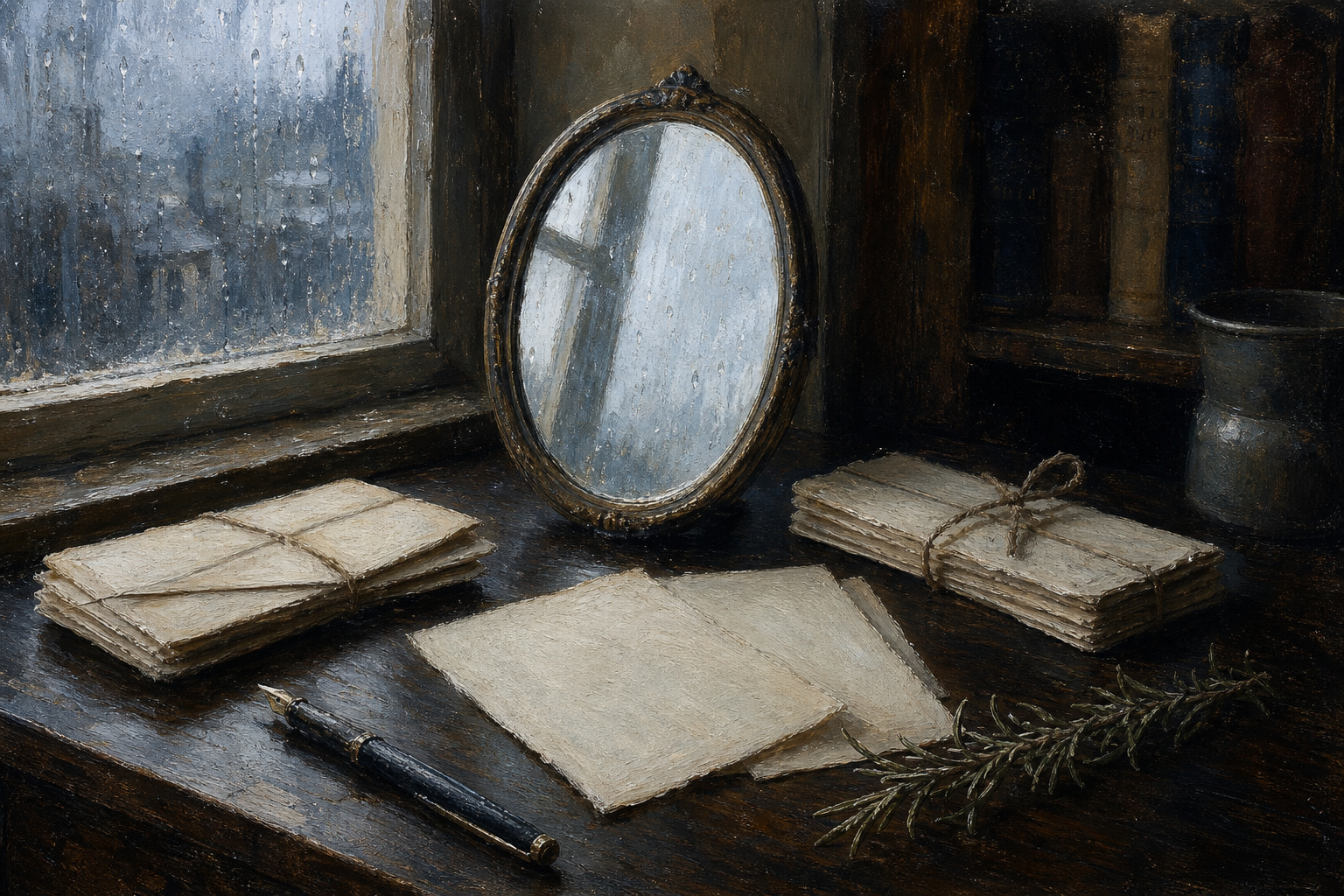
Write yourself a short letter to read again in about a week. You don't need special supplies. Choose a time when you won't have to rush straight out to another appointment, and decide roughly when you want to finish. The letter can be untidy and include questions you haven't answered.
Start with something that is actually happening: “This week, I keep thinking about …” Describe one specific situation. If all you can think of is “everything feels too much,” try recalling the last moment when you had that thought. What was in front of you? Was someone asking you for something? What would have helped at the time? You don't need to explain your entire life in this letter.
Next, write about what you would like to understand more clearly. It can be smaller than a resolution for the whole month. Perhaps you want to work out why you keep putting off a conversation. Perhaps you already know what you want to do and need to choose a date. Or you may discover that you haven't formed an opinion about something yet.
Journaling questions
- Which specific situation do I want to record before I forget the details?
- What do I want in that situation, and how much of it have I said out loud?
- What information or conversation am I still missing?
- What would I like to remember when I reread this, even if the week goes differently from my plans?
You don't have to answer every question. Stay with whichever one brings something to mind. If a next step emerges, make it concrete: send a message, ask a follow-up question, or suggest a date. If it doesn't, the letter can end with an open question.
Add the date and choose when you would like to read it again. When you return to it, notice what has happened in the meantime. A worry may seem smaller, or you may understand it better. You might find that you would now describe your wish differently. Add a few sentences without correcting the original version. Keeping both allows you to see how your view has changed, including anything you couldn't have anticipated when you first sat down.
After this New Moon
One evening doesn't have to settle every question. You might keep just one sentence from your letter because it will help you explain something in your next conversation. A week later, you might want to write about a different subject altogether. You can decide whether this monthly occasion suits you and whether you want to return to it.
If you would also like to explore the coming days' astrological themes in relation to your birth details, you can continue with a personal weekly reading. Take a question that fits your week, then see what you would like to add when you return to your letter.
Astrology and Human Design are for self-reflection and entertainment and do not replace professional advice.

From the Zodiacally community